




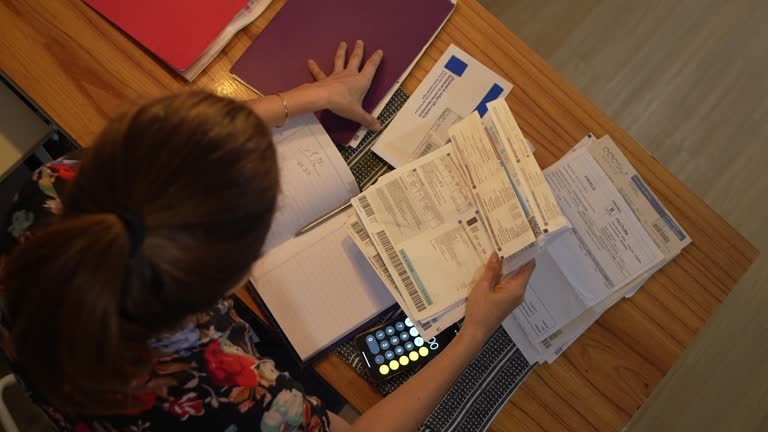
As voting day approaches, every single morning I wake up thinking about Proposition 37 and working on this series. November 3 is getting closer, and I am increasingly aware that Californians need time to read, understand and think about what they are being asked to approve. Each day, another question comes to mind, and I find myself going back to the research, trying to make sense of the numbers and what they mean for the people who want to own a home.
Then I settle into my normal morning routine: a cup of coffee and Good Morning America, observing the antics of Mike, Robin and George, catching the weather and the news. This morning, a headline about the housing market caught my attention. Pending home sales had fallen 7.3 percent in September, reaching the lowest reading since the National Association of Realtors began tracking the index in 2001.¹ Mortgage interest rates were hovering around 7.4 percent.² I have spent much of my professional life in mortgage banking, real estate and finance, so I understood the significance of those numbers. But my thoughts immediately turned to the families who are trying to make ends meet and still hold on to the hope of owning a home.
What a year this has been. Interest rates are rising. The cost of living continues to weigh on families. Political division, war with Iran and other conflicts around the world, tariff disputes with trading partners, particularly Canada, and the price of gasoline, groceries and everyday necessities have made this an exhausting year. We are raising children, caring for parents, paying bills and trying to plan for the future. Meanwhile, another election is upon us, and we have to decide which leaders and which proposals deserve our confidence.
I found myself asking a question that troubles me: How much more can we take?
I suspect a great many of us will be voting angry this year. I know I am. I am angry about the distance between what we are promised and what we actually experience. Every major announcement raises another question for me. What is the real objective? Who benefits? How will we measure success? I want our elected leaders to succeed, because when they solve real problems, our lives get better. I also want to know that the proposals placed before us have been subjected to serious financial analysis.
That brings me to Proposition 37. We are being asked to authorize as much as $25 billion in revenue bonds to support the purchase of newly constructed homes.³ The number is enormous. The promise is attractive. California needs more homeowners. The question that has stayed with me since Part One is whether this financing structure actually puts more families into homes they can afford, and whether the increase is meaningful enough to justify the program.
Here is what frightens me. Most of us have jobs to do, families to care for and bills to pay. We have limited time to read the voter guide, study the law and work through the financial details of every proposition. We see a headline promising $25 billion to help people buy homes, and it can sound as though the state is giving people money. But the assistance proposed here is another mortgage. The buyer would borrow that money and owe it back. The payments are supposed to help repay the bond investors.
That financing could help a family with sufficient income and limited cash to close. I can see the value in that. My fear is that a measure like this could pass largely because the headline sounds generous, while many of us never get the chance to examine the debt and the actual payments. That is why I keep going back to the numbers. I want us to understand what we are being asked to authorize and whether it will make a meaningful difference in homeownership.
From Part One to the Numbers
In Part One, “Before California Votes, Show Us What We Are Being Asked to Approve,” I explained Proposition 37’s proposed $25 billion revenue-bond financing program and laid out the questions we will examine throughout this series. That first article establishes the questions driving this series. The central question now is how many California families can actually afford the homes this financing is intended to help them purchase. We will look at the second mortgage in Part Three and the advertised prices of new homes in ten counties in Part Four. First, let’s examine the income requirement.
What Does 200 Percent of Area Median Income Mean?
Proposition 37 sets an income ceiling based on twice the applicable area median income. People hear “200 percent” and sometimes assume it means almost everyone qualifies. The arithmetic is simple, but its consequences deserve attention.
Area median income, or AMI, is a housing-program benchmark tied to an area and family size. In statistics, a median is the midpoint of a distribution. The published housing-program benchmark can also reflect adjustments required by state and federal rules. It differs from a simple average, which adds incomes together and divides by the number of households or people being measured. It also differs from the salary earned by just one member of a household. CalHFA’s eventual program rules will determine the income schedule and family-size adjustments that apply.
Let’s use Riverside County. I’ve lived here for close to 30 years, so I know the area. According to California’s Department of Housing and Community Development, the 2026 AMI benchmark for a four-person family is $106,500.⁴ Multiply that figure by two:
$106,500 × 200% = $213,000.
A four-person household earning $100,000 falls below that illustrated limit. A four-person household earning $225,000 falls above it. That is what the 200 percent provision does: it establishes an upper boundary for income eligibility. CalHFA’s eventual implementation will determine the precise applicable limit for each applicant.
Now look at the question I am asking. How many families earning less than $213,000 can actually afford a newly constructed home in Riverside County? There is a tremendous difference between earning less than an income ceiling and earning enough to buy the house.
A family earning $100,000 may satisfy the income restriction and still struggle to qualify for the mortgage payments. A family earning $225,000 may have the income and savings to purchase comfortably while falling outside the program. Between those situations lies the group we really need to study: households that meet the program’s requirements, have sufficient cash and credit, and earn enough to sustain the complete cost of owning an eligible home.
That group exists. The question is how large it is.
The Price of a Home Compared With the Income to Buy It
Consider a family earning $100,000 annually and shopping for a newly constructed home priced at $700,000. Divide the home price by annual gross income:
$700,000 ÷ $100,000 = 7.
The price-to-income ratio is seven to one. The price is seven times the household’s annual income. That is a ratio of 7, rather than 7 percent.
Historically, people often used a price-to-income ratio of three or four as a practical starting point for discussing affordability. At three times income, our example family would be shopping around $300,000. At four times income, the price would be $400,000. Those numbers are helpful benchmarks, although mortgage rates, taxes, debts and the down payment determine the actual obligation.
The $700,000 home introduces a much harder monthly payment. And that is where my experience in mortgage lending has taught me to concentrate. We can calculate a payment on paper and find a loan product with an allowable debt-to-income ratio, but the family still has to pay for the mortgage with the money arriving in its bank account. There is a difference between the income a lender uses to approve a transaction and the cash a household has available after taxes and payroll deductions.
I have met families who earn respectable incomes and still find that nearly every dollar is spoken for. Housing, transportation, insurance, food, water, utilities, medical expenses, childcare, and the unexpected bills that always seem to arrive at the wrong time compete for the same income. A mortgage approval is important. Financial stability after the closing is even more important.
Why the Down Payment Is Only One Part of the Problem
California Housing Partnership reported in 2025 that 79 percent of extremely low-income renter households were spending more than half their income on housing. Among moderate-income renter households, the comparable figure was 6 percent.⁵ Those are different income groups, and they tell us something useful: the financial pressure created by housing costs varies enormously across California families.
Think about what that pressure means for the ability to save. Before a family puts money aside for a down payment, the rent gets paid. The utilities get paid. The children get fed. Transportation gets them to work. Savings compete with all those obligations. When housing costs rise faster than income, the journey to homeownership grows longer.
That is why down-payment assistance has a legitimate purpose. Some households have the ongoing income to make the mortgage payment and need help with the cash required to get started. A program that solves that problem can change a family’s future. Other households face a different problem: even with down-payment help, the monthly payment remains beyond what they can comfortably sustain.
Our job is to distinguish those two groups and determine how many households the measure can actually move into sustainable homeownership.
Who Benefits, and What Does California Gain?
There is a strong argument in favor of down-payment assistance, and I understand it. Many families have steady employment, good credit and sufficient income to carry a mortgage. They are paying rent, raising children and meeting their obligations, and accumulating the cash to purchase a home can take years. If a family can comfortably afford the total mortgage payment and needs help getting to the closing table, this kind of financing can make a real difference. That family could become a homeowner sooner than it otherwise would.
There is also an argument for directing assistance toward newly constructed homes. A builder who sees more qualified buyers may have greater confidence in starting the next community. If that happens, the program could help on both sides of the transaction: more opportunities for buyers and more homes added to California’s housing supply. That is an outcome worth measuring.
Now consider another buyer. This household has strong income, good credit and savings. It may be ready to purchase a newly built home with or without assistance. Proposition 37 might allow that buyer to preserve cash, perhaps alongside a negotiated builder incentive. I have seen how financing can change a transaction, but conserving cash at closing does not automatically make it a good investment. The test is the entire financial picture: the price, first and second mortgage terms, monthly payments, repayment obligations and risk. Assistance has value when the economics work for that particular household—not merely because the money is available.
I understand why that buyer would take advantage of the opportunity. In my advisory work, I would expect a client to compare the available financing and select the structure that best serves the family’s interests.
Here is where the public-policy question begins. One buyer becomes a homeowner because the assistance makes the purchase possible. Another receives better financing on a purchase that was going to happen anyway. Both households may receive something valuable. The first represents an additional homeowner attributable to the program. The second represents a financing benefit whose effect on the total number of homeowners may be much smaller.
This is how I would measure success. Start with the number of households that satisfy the income limit. Determine how many have the cash, credit and income to support the entire payment. Identify how many would purchase an eligible home even without the program. Then examine how many additional families actually become homeowners and how many additional homes builders produce because of the assistance.
We are being asked to authorize as much as $25 billion in revenue bonds. I want to see the numbers behind that decision. What is the expected number of borrowers? What is the projected increase in the homeownership rate? How many new homes are expected because of the program, and over what period? Why was $25 billion selected rather than another amount?
Those are the questions that will tell us whether Proposition 37 produces meaningful statewide results. The benefit to individual buyers matters. So does the number of additional homeowners California gains. Good public policy should be able to account for both.
Eligibility Is the Beginning of the Test
The 200 percent AMI calculation gives us an upper income limit. The price-to-income ratio gives us a first look at the distance between earnings and home prices. The monthly mortgage payment will tell us much more. Taken together, these figures begin to identify the households that can use Proposition 37 to purchase and sustain a newly constructed home.
I want to see California increase homeownership. I want to see families build wealth, establish stability and enjoy the security that can come from owning a home they can truly afford. I also want voters to know precisely how a $25 billion financing proposal advances that objective.
In Part Three, we turn to the second mortgage itself. We will look at the interest rates and repayment terms that similar California assistance programs actually offer, calculate the payment burden and examine what remains of the household’s take-home income after its obligations are met. Then Part Four will take that analysis into ten California counties using prices advertised by builders.
That is how we move from an appealing promise to a measurable result.
Before we vote, I invite you to revisit Part One, share this article with someone studying the ballot, and join the discussion. What is the greatest obstacle to homeownership in your community: the down payment, the monthly payment, or both?
Thank you for taking the time to read and reflect. I write to help people think clearly about money, business, real estate, and life, grounded in decades of lived experience and informed by research.
If you are navigating a financial decision, building a business, considering homeownership, or simply trying to make better use of your time and resources, I invite you to engage further.
Subscribe to The Power Is Now TV to connect with me live every weekday, Monday through Friday, from 10:00 AM to 11:00 AM PST, as we record television shows across the Power Is Now TV Network. As a subscriber, you can participate in live tapings, engage in real-time discussions, and connect directly with industry leaders.
Visit ThePowerIsNow.com to access real estate magazines, books, podcasts, television shows, and exclusive media content focused on homeownership, business, and wealth-building.
For personalized support, consulting, and advisory services in real estate, mortgages, business, and personal finance, visit EricFrazier.com to schedule a consultation and learn more about my work as your trusted advisor in business and wealth.
Eric Lawrence Frazier, MBA
Your Trusted Advisor in Business and Wealth
Real Estate Broker CA DRE 01143484 | Mortgage Originator NMLS 461807