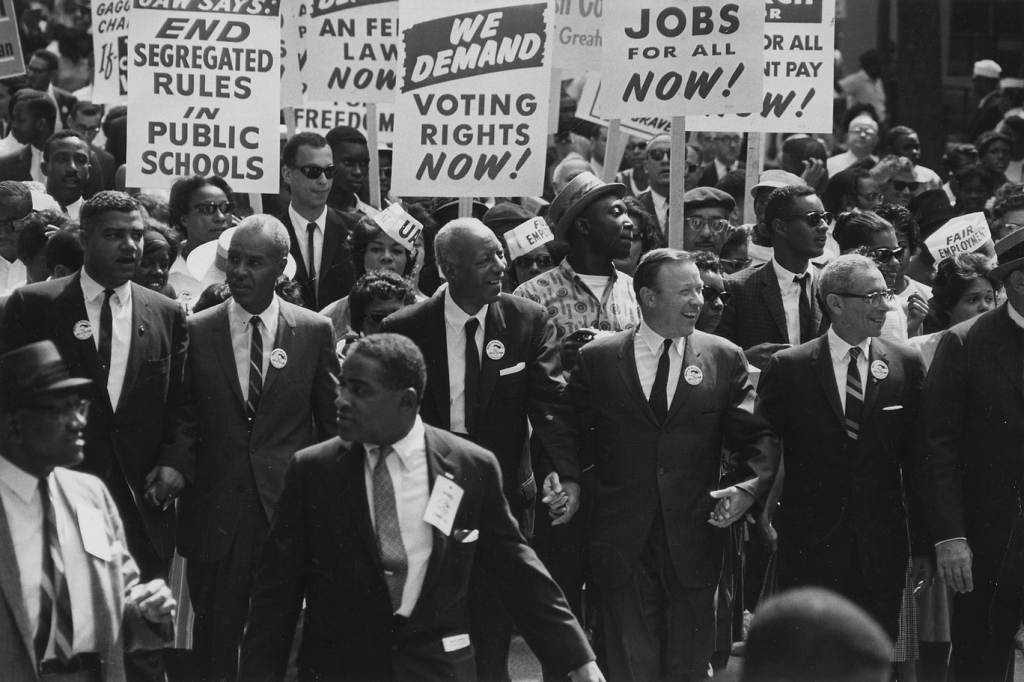
The Civil Rights Movement was a pivotal era in American history, marked by a relentless struggle against racial inequality and discrimination. While the movement is often associated with the fight for voting rights and the desegregation of public facilities, housing played a crucial role in perpetuating racial and socioeconomic disparities. This article explores the significance of housing in the Civil Rights Movement, focusing on the fight against segregation, the struggle for fair housing laws, and the impact of the Fair Housing Act of 1968.
Historical Overview of Housing Segregation
Housing segregation has deep roots in American history, originating from practices like redlining, restrictive covenants, and discriminatory lending. Redlining, initiated by the Home Owners’ Loan Corporation (HOLC) in the 1930s, marked Black neighborhoods as high-risk for mortgage lending, effectively denying residents access to home loans and investment. This practice ensured that Black communities remained underfunded and economically stagnant.
Redlining: A Systemic Barrier
Redlining involved the HOLC creating maps with red lines around neighborhoods deemed “hazardous” for investment, predominantly Black and minority communities. These areas were marked in red, signifying a high risk for lenders. As a result, banks refused to offer mortgages or provided them at exorbitant rates to residents in these neighborhoods. This lack of investment led to deteriorating infrastructure, poor schools, and limited economic opportunities, trapping generations of Black families in a cycle of poverty.
Restrictive Covenants: Legal Segregation
Restrictive covenants further cemented racial segregation by prohibiting the sale of homes to non-white individuals in many neighborhoods. These covenants were legally enforceable contracts embedded in property deeds, ensuring neighborhoods remained racially homogenous. This legal mechanism was used widely until the mid-20th century, maintaining racial boundaries in urban and suburban areas alike.
Discriminatory Lending: Economic Disenfranchisement
Even as restrictive covenants were challenged, discriminatory lending practices persisted. Banks and mortgage lenders often denied loans to Black applicants or charged them higher interest rates compared to white applicants with similar financial profiles. This practice, known as “reverse redlining,” further marginalized Black communities, making it difficult for them to build wealth through homeownership.
Civil Rights Activists’ Strategies and Tactics
Civil rights activists employed various strategies and tactics to challenge housing segregation and advocate for fair housing laws. Organizations like the National Association for the Advancement of Colored People (NAACP) and the Congress of Racial Equality (CORE) spearheaded legal challenges against discriminatory practices. Landmark cases, such as Shelley v. Kraemer (1948), in which the Supreme Court ruled that courts could not enforce racially restrictive covenants, set important precedents.
Legal Battles: Setting Precedents
The NAACP Legal Defense and Educational Fund, under the leadership of Thurgood Marshall, played a crucial role in challenging housing discrimination through the courts. In Shelley v. Kraemer, the Supreme Court ruled that while private parties could create racially restrictive covenants, the state could not enforce them. This decision was a significant step forward, although it did not completely eliminate housing discrimination.
Grassroots Movements: Raising Awareness
Grassroots movements also played a significant role. Activists organized protests, sit-ins, and marches to raise awareness and pressure government officials. The Chicago Freedom Movement, led by Dr. Martin Luther King Jr. in 1966, was one of the most notable campaigns, highlighting the deplorable housing conditions and segregation in Northern cities. This movement underscored the national scope of housing discrimination and galvanized support for legislative change. ????????♂️
The “Tester” Program: Exposing Discrimination
Another tactic used by activists was the “tester” program. Organizations like the NAACP sent white and Black applicants to the same housing to expose discriminatory practices by real estate agents and landlords. This approach helped to gather concrete evidence of discrimination, which could be used in legal battles and public campaigns.
The Fair Housing Act of 1968
The Fair Housing Act of 1968, also known as Title VIII of the Civil Rights Act, was a landmark piece of legislation aimed at eliminating discrimination in housing. The Act was passed shortly after the assassination of Dr. King, serving as a testament to his enduring legacy and the urgency of addressing housing inequality.
Provisions of the Fair Housing Act
The main provisions of the Fair Housing Act included:
- Prohibition of Discrimination: The Act made it illegal to discriminate in the sale, rental, and financing of housing based on race, color, religion, sex, or national origin.
- Enforcement Mechanisms: It established mechanisms for individuals to file complaints with the Department of Housing and Urban Development (HUD) and provided federal enforcement.
- Promotion of Integration: The act aimed to promote residential integration by addressing discriminatory practices and policies that had long perpetuated segregation.
Implementation and Challenges
Initially, enforcement mechanisms were weak, and resistance from local governments and private entities hindered progress. Over time, amendments and additional legislation, such as the Fair Housing Amendments Act of 1988, strengthened enforcement and expanded protections to include disability and familial status.
Impact on the Civil Rights Movement and Subsequent Policies
The Fair Housing Act had a profound impact on the Civil Rights Movement and subsequent housing policies. It marked a significant victory in the fight against systemic racism, signaling a federal commitment to addressing housing discrimination. However, the implementation and enforcement of the act faced substantial challenges.
Ongoing Issues and the Need for Vigilance
Despite these advancements, the legacy of housing discrimination persists. Ongoing issues like gentrification, predatory lending, and zoning laws continue to affect Black communities disproportionately. The Fair Housing Act laid the groundwork for addressing these challenges, but the fight for truly equitable housing remains an ongoing struggle.
The Enduring Struggle for Fair Housing
The role of housing in the Civil Rights Movement underscores the interconnectedness of racial, economic, and social justice. The fight against housing segregation and the passage of the Fair Housing Act of 1968 were critical milestones in the broader struggle for civil rights. While significant progress has been made, the enduring legacy of housing discrimination highlights the need for continued vigilance and advocacy.
Continuing the Fight for Equality
The Fair Housing Act, though not a complete solution, provided a foundation for progress. The Department of Housing and Urban Development (HUD) was tasked with enforcing the Act, working alongside fair housing organizations to combat ongoing discrimination. However, the journey towards equitable housing is far from over. Persistent issues such as racial steering, gentrification, and discriminatory lending practices continue to plague minority communities.
A Call to Action
Addressing these issues is not only a matter of historical justice but also a pressing concern for contemporary society, as fair housing remains a cornerstone of equality and opportunity for all. The fight for fair housing in the Civil Rights Movement serves as a reminder that access to safe and decent housing is essential for achieving true equality. As the battle for racial equality continues, addressing housing segregation and discrimination remains a critical step toward building a more just and equitable society.
If the spirit of Juneteenth inspires you to take steps toward your own future, I invite you to schedule a consultation with me. Together, we can navigate the journey to homeownership, honoring our heritage and building a brighter future for our community. I am dedicated to helping Black Americans achieve their dreams and ensuring that the path to owning a home is accessible and rewarding. Let’s work together to turn the promise of freedom into a reality for everyone.
Eric Lawrence Frazier MBA
President | CEO | Advisor
Real Estate | Mortgage | Business | Media | Marketing
The Power Is Now Media Inc.
800-401-8994 ext. 703
Direct: 714-475-8629
CA DRE: 01143484 NMLS: 461807
Appointment Calendars:
Homebuyer consultation: https://calendly.com/ericfrazier/homebuyerconsultation
Homeseller consultation: https://calendly.com/ericfrazier/realestateconsultation
Real Estate Agent Consultation: https://calendly.com/ericfrazier/agentorientation