






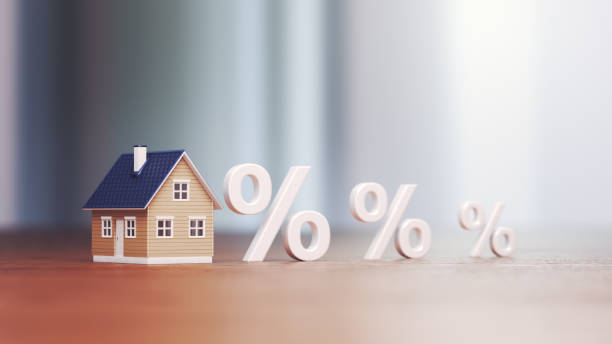
Mortgage rates are often discussed as if they are abstract financial indicators, but in practice, they directly determine how much home a household can realistically afford. Even small movements in interest rates can significantly alter monthly payments, total borrowing capacity, and long-term financial exposure. In a market where affordability remains a central constraint, understanding the real impact of rate changes has become more important than simply tracking whether rates are rising or falling.
Recent data from the Primary Mortgage Market Survey shows that the average 30-year fixed mortgage rate stood at 6.65% on August 20, 2026, after reaching 6.69% earlier in the month. While this appears to be a modest adjustment, the difference between fractions of a percentage point can translate into meaningful changes in purchasing power. Freddie Mac also continues to highlight that borrowers can reduce costs by comparing offers across multiple lenders, reinforcing the importance of rate shopping in a high-cost borrowing environment.
To understand what a 6.65% mortgage truly means, it is necessary to translate interest rates into household-level financial outcomes. This includes monthly payment differences, changes in qualifying loan amounts, shifts in debt-to-income ratios, and the cumulative cost of interest over time. When viewed through this lens, interest rates are not just market data—they are a direct driver of housing accessibility.
How Interest Rates Shape Monthly Housing Costs
The most immediate impact of a mortgage rate is its effect on monthly payments. A small change in interest rates can significantly alter the principal and interest portion of a mortgage payment, especially at higher loan amounts.
For example, on a $400,000 loan:
- At 6.65%, the estimated principal and interest payment is approximately $2,570 per month
- At 6.40%, the payment drops to roughly $2,510 per month
- At 6.90%, the payment rises to about $2,640 per month
A difference of just 0.25% can shift monthly costs by around $60–$80, which compounds significantly over time. A 0.50% difference can exceed $120 per month, while a full 1% change can increase or decrease payments by more than $250 per month depending on loan size.
These changes do not only affect comfort levels—they directly influence whether a borrower qualifies for a loan under standard underwriting guidelines.
Buying Power and Loan Qualification
Mortgage rates also determine how much a buyer can borrow while staying within acceptable debt-to-income ratios. As rates increase, the same monthly budget supports a smaller loan amount.
Using a simplified example based on a fixed monthly housing budget of $2,600:
- At 6.40%, a buyer may qualify for approximately $405,000–$415,000 in loan value
- At 6.65%, that range drops closer to $390,000–$400,000
- At 6.90%, qualifying power may fall to around $375,000–$385,000
This means a 0.50% rate difference can reduce purchasing power by tens of thousands of dollars without any change in income or credit profile. In practical terms, buyers are often priced out of certain neighborhoods or property types simply due to rate movement rather than changes in property values.
This is one of the most misunderstood aspects of the current housing environment: affordability is not only about home prices, but also about financing structure.
The Long-Term Cost of Waiting or Locking In
Beyond monthly payments, interest rates have a compounding effect over the life of a loan. A 30-year mortgage at 6.65% results in significantly higher total interest paid compared to lower-rate environments.
On a $400,000 loan:
- Total interest over 30 years at 6.65% can exceed $500,000
- At 6.40%, total interest may be reduced by tens of thousands over the loan term
- At 7.00%, total interest increases substantially, even if the purchase price remains the same
This long-term perspective highlights why timing matters, but also why affordability planning must extend beyond the initial approval process. A borrower may qualify for a mortgage at 6.65%, but long-term financial sustainability depends on whether that payment remains manageable under changing life circumstances.
The Gap Between Qualification and True Affordability
One of the most important distinctions in today’s market is the difference between qualifying for a mortgage and being able to comfortably sustain it. Lenders evaluate qualification based on income, debt ratios, and current interest rates. However, household affordability includes additional pressures such as insurance, property taxes, maintenance costs, and other living expenses.
As rates rise, borrowers often qualify for smaller loans, but the monthly payment still represents a larger share of income. This creates a situation where approval does not always equal comfort. In higher-rate environments, buyers may find themselves approved for amounts that stretch their budgets more tightly than expected.
Understanding this gap is essential for avoiding financial strain after purchase.
Why Rate Shopping Matters More Than Ever
Freddie Mac continues to emphasize that borrowers can achieve meaningful savings by comparing offers across multiple lenders. Even within the same rate environment, lender pricing, fees, and credit adjustments can vary significantly.
A difference of even 0.125% to 0.25% across lenders can result in measurable savings over time. In a market where affordability is already constrained, this type of optimization becomes an important part of financial planning rather than a minor detail.
A mortgage rate of 6.65% is more than a headline figure—it directly shapes monthly payments, borrowing capacity, and long-term financial commitments. Even small rate changes can alter affordability by tens of thousands of dollars in qualifying power and significantly impact total interest paid over the life of a loan.
The current environment reinforces a critical reality: housing decisions are no longer driven by price alone. Financing conditions now play an equally important role in determining what is accessible and sustainable for households. Understanding how interest rates translate into real-world buying power provides a clearer foundation for making informed decisions in a constrained affordability landscape.
Thank you for taking the time to read and reflect. I write to help people think clearly about money, business, real estate, and life — not from theory, but from decades of lived experience.
If you are navigating a financial decision, building a business, considering homeownership, or simply trying to make better use of your time and resources, I invite you to engage further.
Subscribe to The Power Is Now TV to connect with me live every weekday, Monday through Friday, from 10:00 AM to 11:00 AM PST, as we record television shows across the Power Is Now TV Network. As a subscriber, you can participate in live tapings, engage in real-time discussions, and connect directly with industry leaders.
Visit ThePowerIsNow.com to access real estate magazines, books, podcasts, television shows, and exclusive media content focused on homeownership, business, and wealth-building.
For personalized support, consulting, and advisory services in real estate, mortgages, business, and personal finance, visit EricFrazier.com to schedule a consultation and learn more about my work as your trusted advisor in business and wealth.
Eric Lawrence Frazier, MBA
Your trusted advisor in business and wealth
www.ericfrazier.com | www.thepowerisnow.com
NMLS #461807 | CA DRE #01143484
Schedule a consultation: https://www.ericfrazier.com
References
Freddie Mac. (2026). Primary Mortgage Market Survey (PMMS), August 20, 2026 release. Retrieved August 26, 2026, from https://www.freddiemac.com/pmms
Federal Reserve Bank of St. Louis. (2026). 30-Year Fixed Rate Mortgage Average in the United States (MORTGAGE30US). Retrieved August 26, 2026, from https://fred.stlouisfed.org/series/MORTGAGE30US
Consumer Financial Protection Bureau. (2026). Understanding mortgage costs and rate comparisons. Retrieved August 26, 2026, from https://www.consumerfinance.gov/owning-a-home/compare-lenders/