







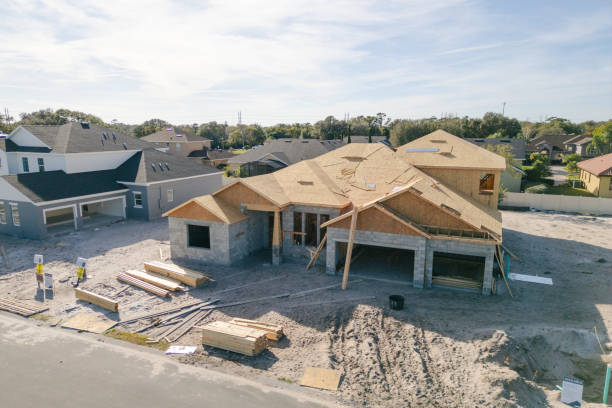
The new-home segment of the housing market is showing signs of adjustment as builders contend with affordability pressures, cautious buyers, and changing sales conditions. Although new-home sales have recovered from their July decline, the latest national figures indicate that demand remains below year-ago levels. Builders are continuing to navigate a market in which financing costs influence purchasing decisions and available inventory gives buyers more opportunities to compare properties before committing.
According to the latest U.S. Census Bureau and Department of Housing and Urban Development report, new single-family home sales reached a seasonally adjusted annual rate of 676,000 in September 2026. This represents a modest 0.6% decline from August and a 5.3% decrease compared with September 2025. Approximately 476,000 new homes were available for sale at the end of September, representing 8.4 months of supply. The median sales price stood at $400,400, down 3.9% from the same period last year.
These figures reveal a market that is adjusting rather than experiencing a complete slowdown. Although the supply of new homes has declined slightly, the available inventory remains substantial relative to the current sales pace. Builders are responding by offering financing assistance, closing cost support, price reductions, and other incentives to attract buyers. For prospective homeowners, understanding the financial value of these offers is becoming an important part of evaluating new construction opportunities.
A New Balance Between Inventory and Buyer Demand
The September figures provide a different perspective from the conditions reported during the summer. New-home sales increased to 684,000 in August before easing slightly to 676,000 in September. Although this represents a relatively stable month-to-month sales pace, activity remains below the level recorded one year earlier.
Available inventory also declined from 481,000 homes in August to 476,000 in September. The months of supply decreased from 8.5 to 8.4, indicating that the market is absorbing some of its available inventory. However, supply remains above the 8.2 months recorded in September 2025, suggesting that builders continue to face a more competitive selling environment than they did a year ago.
Mortgage financing remains an important consideration. Freddie Mac reported that the average 30-year fixed mortgage rate was 7.24% on October 29, 2026, compared with 6.17% during the same period last year. Although rates declined slightly from the previous week, borrowing costs remain a significant factor in determining how much buyers can afford.
For builders, these conditions create pressure to make new construction more financially attractive without relying exclusively on reductions in advertised prices.
Builder Incentives Are Becoming a Key Negotiation Tool
Builder incentives have become an important part of the effort to maintain sales activity. According to the National Association of Home Builders, 66% of builders reported using sales incentives in September 2026, up from 63% in August. Additionally, 38% of builders reduced their selling prices, with the average reduction remaining at 6%.
These figures demonstrate that incentives are not simply occasional promotional offers. They have become an established tool for competing for buyers in a market where financing costs and affordability influence purchasing decisions.
Common builder incentives include:
- Mortgage rate buydowns, including temporary and permanent reductions in interest rates.
- Closing cost assistance to reduce the amount buyers need at settlement.
- Design upgrades and premium finishes offered at reduced prices or included in the purchase.
- Lot premium reductions or waivers.
- Discounts on completed inventory homes that builders want to sell quickly.
Each incentive has a different financial impact. A temporary mortgage rate buydown can lower monthly payments during the initial years of ownership, while a permanent rate reduction can affect the cost of borrowing throughout the loan term. Closing cost assistance reduces the cash required at closing, but it does not necessarily reduce the principal balance or long-term interest expense.
For this reason, buyers should evaluate the complete incentive package rather than focusing on the advertised value of individual offers. A smaller purchase price reduction combined with a permanent rate buydown may provide greater long-term financial benefits than a larger upfront discount without financing assistance.
How to Evaluate the True Value of New Construction
The most effective way to evaluate a builder’s offer is to examine the total cost of ownership rather than relying on the advertised purchase price. Buyers should consider several financial factors before deciding whether a new construction property represents a better opportunity than an existing home.
First, mortgage rate incentives should be evaluated over the expected holding period. A reduction in the interest rate can lower monthly principal and interest payments, but buyers should also examine the upfront cost of obtaining that reduction and whether the benefit continues after an introductory period. Comparing the loan terms, total interest expense, and monthly payments provides a clearer understanding of the actual savings.
Second, design upgrades should be assessed according to their practical value. Builders may advertise substantial savings on upgraded flooring, countertops, appliances, and other finishes. However, the stated value of these upgrades does not necessarily represent what a buyer would pay in the broader retail market. Buyers should distinguish between improvements they genuinely want and additions that increase the purchase price without providing comparable value.
Third, completed inventory homes deserve particular attention. These properties may offer advantages because construction is already finished, reducing the waiting period associated with purchasing a home that has not yet been built. Builders may also be more willing to negotiate on completed homes because carrying unsold inventory creates ongoing expenses.
Finally, buyers should examine lot premiums carefully. A premium location within a development may offer better views, additional privacy, or a more desirable position. However, the additional cost should be compared with the property’s actual features and potential resale appeal.
When these factors are evaluated together, buyers can determine whether a builder’s offer provides genuine financial value compared with available resale properties.
Why Builders May Offer Stronger Opportunities
Builders operate differently from individual homeowners selling existing properties. They must manage construction financing, land expenses, labor costs, project schedules, and inventory carrying costs. Unsold completed homes can tie up capital that builders may prefer to redirect toward other projects.
This creates an incentive to maintain sales activity even when buyers become more selective. Rather than immediately reducing the advertised price of every property, builders may use financing incentives, closing cost assistance, and other concessions to make their homes more attractive.
The September builder survey reinforces this point. With 66% of builders reporting the use of sales incentives and 38% reducing prices, competition for buyers remains an important part of the current new-home market.
However, opportunities are not distributed equally across every development or geographic area. Some communities may have limited available inventory, while others may have several completed homes awaiting buyers. Incentives can also differ depending on the builder’s financial position, construction schedule, and sales objectives.
Buyers who compare multiple developments, examine completed inventory, and understand the financing terms attached to promotional offers are better positioned to negotiate favorable arrangements.
What the Current New-Home Market Means for Buyers and Builders
The new-home market is entering November with a combination of relatively steady monthly sales, substantial available supply, and continued pressure on affordability. September 2026 sales reached 676,000 annualized units, while available inventory stood at 476,000 homes, representing 8.4 months of supply. Although these figures are more favorable than the July conditions, they indicate that builders must continue working to attract qualified buyers.
For buyers, this environment creates opportunities to negotiate beyond the advertised purchase price. Mortgage rate buydowns, closing cost assistance, inventory home discounts, and selected upgrades can all contribute to a more favorable transaction when evaluated carefully.
For builders, the challenge is to structure incentives that support sales while protecting project margins and maintaining financial flexibility. The companies that understand changing buyer priorities and respond with competitive financing and pricing strategies may be better positioned to maintain sales activity.
Ultimately, purchasing a new home should involve more than comparing floor plans, finishes, and promotional offers. Buyers need to understand the financing, the complete cost of ownership, and the long-term value of the property. In a market where builders are competing more actively for qualified purchasers, informed decisions can make a meaningful difference.
Thank you for taking the time to read and reflect. I write to help people think clearly about money, business, real estate, and life, not from theory, but from decades of lived experience.
If you are navigating a financial decision, building a business, considering homeownership, or simply trying to make better use of your time and resources, I invite you to engage further.
Subscribe to The Power Is Now TV to connect with me live every weekday, Monday through Friday, from 10:00 AM to 11:00 AM PST, as we record television shows across the Power Is Now TV Network. As a subscriber, you can participate in live tapings, engage in real-time discussions, and connect directly with industry leaders.
Visit ThePowerIsNow.com to access real estate magazines, books, podcasts, television shows, and exclusive media content focused on homeownership, business, and wealth-building.
For personalized support, consulting, and advisory services in real estate, mortgages, business, and personal finance, visit EricFrazier.com to schedule a consultation and learn more about my work as your trusted advisor in business and wealth.
Eric Lawrence Frazier, MBA
Your trusted advisor in business and wealth
www.ericfrazier.com | www.thepowerisnow.com
NMLS #451807 | CA DRE #01143484
Schedule a consultation: https://calendly.com/ericfrazier/real-estate-mortgage-consultation-clients
References