Across all fifty states, in more than 2,700 cities, an estimated seven million Americans gathered on No Kings Day. According to national and local reports, it has now been confirmed as the largest single-day protest in U.S. history. From Boston Common to Los Angeles City Hall, from small towns in Iowa to downtown Atlanta, streets overflowed with handmade signs declaring “No Kings,” “Keep the Republic,” and “We the People Still Matter.”
Under ordinary circumstances, such a turnout would be called a movement—a spontaneous, nationwide act of civic conscience. But these are not ordinary times.
When asked about the demonstrations, the President dismissed them with a single line:
“These people do not represent our country.”
Yet anyone watching those crowds knows better. Most of us know someone who marched—a coworker, a pastor, a veteran, a teacher, a student. They are not extremists. They are the republic itself: the diverse, striving mix of Americans who still believe that democracy is theirs to protect.
And still, the question remains: What exactly are we protesting?
Are we standing against tyranny—or simply reacting to the discomfort of seeing power used in ways we did not choose? Because if the President has broken no law—and the courts say he has not—then our outrage must find a new home: not in the streets, but in the system we built to correct itself.
The Republic Still Stands
This nation was born out of rebellion against monarchy. “No Kings” was not just a slogan—it was our founding declaration. We built a system that did not depend on saints but on structure. The founders assumed that human beings would always be flawed—that presidents would have egos, that ambition would forever compete with virtue. So they built guardrails: checks, balances, co-equal branches, and the slow, grinding machinery of law.
So when people say the Republic is dying, I ask: How can it be dying if its very institutions are still the instruments of resistance? The Supreme Court rules, Congress legislates, and elections proceed. Protesters march, journalists question, and citizens vote. That’s not collapse—that’s democracy breathing. That’s freedom with a pulse.
When Outrage Becomes a Mirror
Even when the President has tested the limits of the law—and the Supreme Court has stopped him, or at times endorsed him—what we are witnessing is not tyranny; it is democracy in motion. This is how our Republic was designed to work. The courts interpret. Congress legislates. The President executes. Each branch pushes, pulls, challenges, and restrains the other. That’s not dysfunction—that’s design.
And whether a Democrat or a Republican sits in the Oval Office, the machinery keeps turning, because the Constitution has no party—it has purpose.
One administration ago, Congress advanced the agenda of a Democratic president. Today, it advances the agenda of a Republican one. Tomorrow, it may swing again. Everything that happens in Washington—laws passed, orders signed, budgets approved—is the direct result of what the democracy voted for. We the people are still in charge.
We are not ruled—we are represented. And representation means that sometimes government will reflect our vision, and sometimes it will reflect our neighbor’s. That is the price and privilege of freedom. If the person in office is who you voted for, you are pleased. If not, you are angry. But what unites you both is far greater than what divides you: he is still your President, and this is still your democracy.
You don’t have to like the outcome to believe in the process. That belief is what separates a democracy from a mob.
When Protest Loses Its Purpose
Protest has always been a sacred act in America. From the Boston Tea Party to Selma, from women’s suffrage to civil rights, protest has changed the course of our nation. But protest was never meant to be therapy—it was meant to be strategy. It existed to achieve something concrete.
So I must ask, respectfully:
What is “No Kings” really demanding?
Are we seeking new laws—or simply new headlines?
Are we opposing tyranny—or just venting emotion at a man we dislike?
Because once protest becomes emotional theater instead of civic purpose, it loses the very power that made it sacred.
Accountability is not canceled by calm. Protest has its place—but the greater act of patriotism is to preserve the structure that allows protest to exist at all.
To question authority is not to reject it. It is to remind authority—and ourselves—that it exists to serve, not to rule.
We Elected Humanity, Not Holiness
Every President—whether admired or despised—is a reflection of us. Each one embodies our national temperament at a given moment. Some represent our hope; others, our anger. But none are divine. Presidents are human. They err, they boast, they overreach. The founders knew this.
That’s why I say to both sides: we do not need a perfect man in the White House; we need a faithful people in the Republic.
Faithful to truth.
Faithful to process.
Faithful to the idea that no one man, and no one protest, defines America.
Cynicism asks nothing of us. Citizenship demands everything. The Republic is kept not by those who shout the loudest, but by those who stay the longest.
So Now What?
If the courts are functioning and the Constitution is holding, then the next question is: What do we do with our freedom while we still have it? Because protest without purpose is noise—but protest with a plan becomes policy.
Let’s start with what we can actually control:
- Fund the government. Stop using shutdowns as weapons. Stability is patriotic.
- Extend the tax credits that keep healthcare affordable.
- Invest in infrastructure. Roads, schools, energy, housing—the arteries of national life.
- Rebuild civic education. Democracy dies in ignorance long before it dies in tyranny.
- Vote in every election.
- Serve where you stand. The most powerful protest is service.
These are the revolutions that still matter. Not the ones on TV, but the ones that happen quietly, every day, in the hearts of people who refuse to give up on America.
A Republic Worth Keeping
Benjamin Franklin, when asked what kind of government the Constitutional Convention had created, replied:
“A Republic—if you can keep it.”
That warning wasn’t meant for kings or presidents. It was meant for us. Because keeping the Republic is not the president’s job—it’s the people’s responsibility.
So yes, march if you must. Carry your sign, lift your voice, express your heart. But when the protest ends, let it awaken you, not exhaust you. Let it lead you to action, not despair. Let it drive you to policy, not personality.
Because in the end, the Republic still stands. The only question now is whether we will.
Our unity has never been uniformity—it has always been the shared promise that liberty will outlast the moment. Democracy, like faith, is built on trust in unseen outcomes—the belief that if we sow righteousness, justice will rise in due season.
We must be careful not to mistake our frustration with politics for the failure of democracy. America is not dying—it is demanding adults. The Constitution is not collapsing—it is calling for character.
We can spend another season pointing fingers, or we can pick up the tools of citizenship and build something better. We can shout “No Kings!” in the streets—or we can prove it in our actions.
The Republic has survived war, assassination, recession, and division. It will survive this too. But its survival depends on us: not our outrage, but our obedience to conscience; not our hatred, but our hope.
So let us be clear: No Kings Day was not the failure of democracy—it was its proof. Seven million people, peacefully gathering under the same sky, without violence or bloodshed, to express conscience—that is the Republic alive and breathing.
And yet, imagine what this moment could become if it found focus. Imagine if the same seven million marched not just in protest but in purpose—rallying behind a bill, an election, or a measurable reform. Imagine if the passion in our streets became the votes in our precincts, the petitions in our legislatures, the signatures on new laws.
That is the next chapter of democracy: emotion transformed into execution, unity shaped into policy.
So I applaud every person who marched. I thank every police officer who stood guard and every journalist who told the story. This was a magnificent expression of freedom. But now the challenge stands before us—to turn passion into participation, protest into progress, and energy into enduring reform.
Because a protest, no matter how historic, is not the destination of democracy—it is only the invitation. The real work begins not in the streets, but in the systems we sustain. And that is where we the people must now go.
————-
Thank you for reading this blog. I appreciate your continued support in raising awareness about the issues that impact our relationships, families, friendships, and the institutions and environments—political, social, and economic—in which we live and work. Please share this blog—and explore my other articles and videos—each one created to educate, empower, and uplift. Together, we can challenge the belief systems that hold us back and press forward into openness, love, consideration, and peace—opening doors of opportunity for all.
Subscribe today to The Power Is Now TV for insightful shows on real estate, business, and wealth-building. Become a member of EricFrazier.com to access exclusive business and personal financial consulting resources.
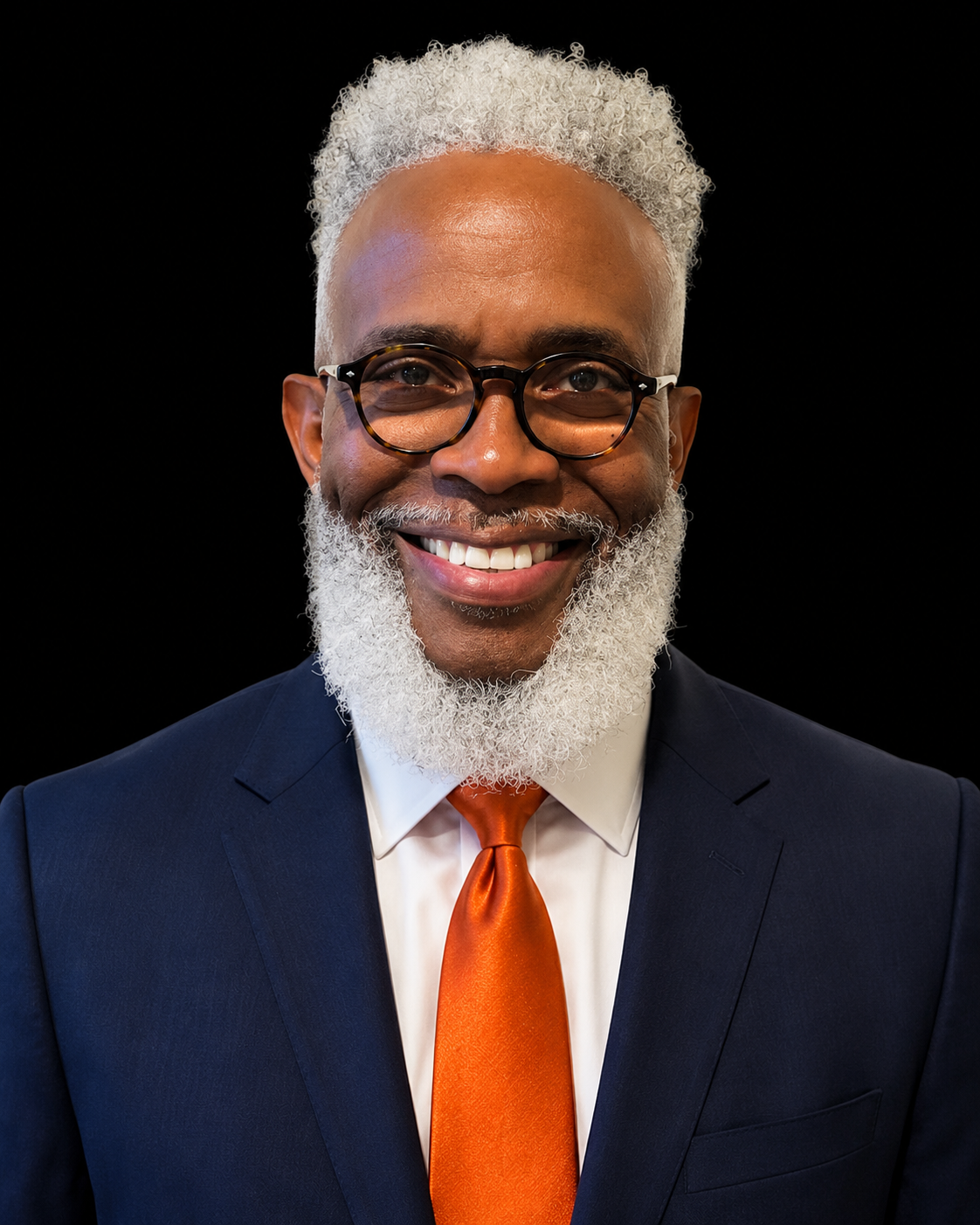
Eric Lawrence Frazier, MBA
Your trusted advisor in business and wealth
www.ericfrazier.com | www.thepowerisnow.com
NMLS #461807 | CA DRE #01143484
Schedule a consultation: https://www.ericfrazier.com


No Kings, No Chaos: What Are We Really Protesting?
Across all fifty states, in more than 2,700 cities, an estimated seven million Americans gathered on No Kings Day. According to national and local reports, it has now been confirmed as the largest single-day protest in U.S. history. From Boston Common to Los Angeles City Hall, from small towns in Iowa to downtown Atlanta, streets overflowed with handmade signs declaring “No Kings,” “Keep the Republic,” and “We the People Still Matter.”
Under ordinary circumstances, such a turnout would be called a movement—a spontaneous, nationwide act of civic conscience. But these are not ordinary times.
When asked about the demonstrations, the President dismissed them with a single line:
“These people do not represent our country.”
Yet anyone watching those crowds knows better. Most of us know someone who marched—a coworker, a pastor, a veteran, a teacher, a student. They are not extremists. They are the republic itself: the diverse, striving mix of Americans who still believe that democracy is theirs to protect.
And still, the question remains: What exactly are we protesting?
Are we standing against tyranny—or simply reacting to the discomfort of seeing power used in ways we did not choose? Because if the President has broken no law—and the courts say he has not—then our outrage must find a new home: not in the streets, but in the system we built to correct itself.
The Republic Still Stands
This nation was born out of rebellion against monarchy. “No Kings” was not just a slogan—it was our founding declaration. We built a system that did not depend on saints but on structure. The founders assumed that human beings would always be flawed—that presidents would have egos, that ambition would forever compete with virtue. So they built guardrails: checks, balances, co-equal branches, and the slow, grinding machinery of law.
So when people say the Republic is dying, I ask: How can it be dying if its very institutions are still the instruments of resistance? The Supreme Court rules, Congress legislates, and elections proceed. Protesters march, journalists question, and citizens vote. That’s not collapse—that’s democracy breathing. That’s freedom with a pulse.
When Outrage Becomes a Mirror
Even when the President has tested the limits of the law—and the Supreme Court has stopped him, or at times endorsed him—what we are witnessing is not tyranny; it is democracy in motion. This is how our Republic was designed to work. The courts interpret. Congress legislates. The President executes. Each branch pushes, pulls, challenges, and restrains the other. That’s not dysfunction—that’s design.
And whether a Democrat or a Republican sits in the Oval Office, the machinery keeps turning, because the Constitution has no party—it has purpose.
One administration ago, Congress advanced the agenda of a Democratic president. Today, it advances the agenda of a Republican one. Tomorrow, it may swing again. Everything that happens in Washington—laws passed, orders signed, budgets approved—is the direct result of what the democracy voted for. We the people are still in charge.
We are not ruled—we are represented. And representation means that sometimes government will reflect our vision, and sometimes it will reflect our neighbor’s. That is the price and privilege of freedom. If the person in office is who you voted for, you are pleased. If not, you are angry. But what unites you both is far greater than what divides you: he is still your President, and this is still your democracy.
You don’t have to like the outcome to believe in the process. That belief is what separates a democracy from a mob.
When Protest Loses Its Purpose
Protest has always been a sacred act in America. From the Boston Tea Party to Selma, from women’s suffrage to civil rights, protest has changed the course of our nation. But protest was never meant to be therapy—it was meant to be strategy. It existed to achieve something concrete.
So I must ask, respectfully:
What is “No Kings” really demanding?
Are we seeking new laws—or simply new headlines?
Are we opposing tyranny—or just venting emotion at a man we dislike?
Because once protest becomes emotional theater instead of civic purpose, it loses the very power that made it sacred.
Accountability is not canceled by calm. Protest has its place—but the greater act of patriotism is to preserve the structure that allows protest to exist at all.
To question authority is not to reject it. It is to remind authority—and ourselves—that it exists to serve, not to rule.
We Elected Humanity, Not Holiness
Every President—whether admired or despised—is a reflection of us. Each one embodies our national temperament at a given moment. Some represent our hope; others, our anger. But none are divine. Presidents are human. They err, they boast, they overreach. The founders knew this.
That’s why I say to both sides: we do not need a perfect man in the White House; we need a faithful people in the Republic.
Faithful to truth.
Faithful to process.
Faithful to the idea that no one man, and no one protest, defines America.
Cynicism asks nothing of us. Citizenship demands everything. The Republic is kept not by those who shout the loudest, but by those who stay the longest.
So Now What?
If the courts are functioning and the Constitution is holding, then the next question is: What do we do with our freedom while we still have it? Because protest without purpose is noise—but protest with a plan becomes policy.
Let’s start with what we can actually control:
These are the revolutions that still matter. Not the ones on TV, but the ones that happen quietly, every day, in the hearts of people who refuse to give up on America.
A Republic Worth Keeping
Benjamin Franklin, when asked what kind of government the Constitutional Convention had created, replied:
“A Republic—if you can keep it.”
That warning wasn’t meant for kings or presidents. It was meant for us. Because keeping the Republic is not the president’s job—it’s the people’s responsibility.
So yes, march if you must. Carry your sign, lift your voice, express your heart. But when the protest ends, let it awaken you, not exhaust you. Let it lead you to action, not despair. Let it drive you to policy, not personality.
Because in the end, the Republic still stands. The only question now is whether we will.
Our unity has never been uniformity—it has always been the shared promise that liberty will outlast the moment. Democracy, like faith, is built on trust in unseen outcomes—the belief that if we sow righteousness, justice will rise in due season.
We must be careful not to mistake our frustration with politics for the failure of democracy. America is not dying—it is demanding adults. The Constitution is not collapsing—it is calling for character.
We can spend another season pointing fingers, or we can pick up the tools of citizenship and build something better. We can shout “No Kings!” in the streets—or we can prove it in our actions.
The Republic has survived war, assassination, recession, and division. It will survive this too. But its survival depends on us: not our outrage, but our obedience to conscience; not our hatred, but our hope.
So let us be clear: No Kings Day was not the failure of democracy—it was its proof. Seven million people, peacefully gathering under the same sky, without violence or bloodshed, to express conscience—that is the Republic alive and breathing.
And yet, imagine what this moment could become if it found focus. Imagine if the same seven million marched not just in protest but in purpose—rallying behind a bill, an election, or a measurable reform. Imagine if the passion in our streets became the votes in our precincts, the petitions in our legislatures, the signatures on new laws.
That is the next chapter of democracy: emotion transformed into execution, unity shaped into policy.
So I applaud every person who marched. I thank every police officer who stood guard and every journalist who told the story. This was a magnificent expression of freedom. But now the challenge stands before us—to turn passion into participation, protest into progress, and energy into enduring reform.
Because a protest, no matter how historic, is not the destination of democracy—it is only the invitation. The real work begins not in the streets, but in the systems we sustain. And that is where we the people must now go.
————-
Thank you for reading this blog. I appreciate your continued support in raising awareness about the issues that impact our relationships, families, friendships, and the institutions and environments—political, social, and economic—in which we live and work. Please share this blog—and explore my other articles and videos—each one created to educate, empower, and uplift. Together, we can challenge the belief systems that hold us back and press forward into openness, love, consideration, and peace—opening doors of opportunity for all.
Subscribe today to The Power Is Now TV for insightful shows on real estate, business, and wealth-building. Become a member of EricFrazier.com to access exclusive business and personal financial consulting resources.
Eric Lawrence Frazier, MBA
Your trusted advisor in business and wealth
www.ericfrazier.com | www.thepowerisnow.com
NMLS #461807 | CA DRE #01143484
Schedule a consultation: https://www.ericfrazier.com