




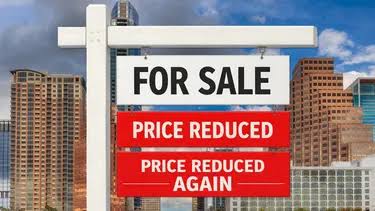
A noticeable shift is unfolding in residential housing conditions as pricing adjustments become more common across many metropolitan areas. After a period defined by aggressive listing strategies and limited negotiation flexibility, sellers are increasingly recalibrating expectations to align with changing demand. This adjustment is not happening in isolation; it is tied to slower buyer activity, higher borrowing costs, and expanding inventory in multiple regions.
Recent national pricing data reflects this transition clearly. The median list price has fallen to approximately $428,950, marking a 2.4% decline from the previous year and extending a pattern of nine consecutive months of year-over-year reductions in asking prices. At the same time, about 20% of active listings have recorded at least one price reduction, and price per square foot has declined in 34 of the 50 largest metropolitan areas. These figures signal more than seasonal variation—they point to a broader recalibration of pricing strategy across the housing market.
For buyers, this environment introduces new opportunities but also new risks. A lower asking price does not automatically translate into a strong deal, just as an unchanged price does not necessarily indicate overvaluation. Understanding how list price, market value, and negotiating value interact is now essential for making informed decisions. The ability to distinguish between perception and actual market alignment has become one of the most important skills in today’s real estate environment.
The Gap Between List Price and Market Reality
One of the most important concepts in the current housing cycle is the difference between list price and actual market value. List price represents the seller’s initial asking position, which may or may not reflect current market conditions. In contrast, market value is determined by recent comparable sales, buyer demand, property condition, and local absorption rates.
In many regions, list prices were set during stronger market conditions and have not fully adjusted to current demand levels. This has led to an increase in price reductions, particularly in markets where inventory has grown faster than buyer activity. However, a reduced price does not automatically indicate that a property is undervalued. In many cases, the adjustment simply brings the listing closer to its true market range.
This distinction is critical because buyers who rely only on visible price reductions may misinterpret value. A home reduced from an inflated starting point can still be overpriced relative to comparable sales in the same neighborhood. On the other hand, a smaller reduction on a properly priced home may represent a genuine opportunity.
What the Data Is Showing Across Major Markets
Recent housing data reveals a clear pattern of softening pricing conditions across a broad range of metropolitan areas. With the national median list price declining by 2.4% year-over-year, the market is showing sustained downward pressure on seller expectations. More importantly, this is not a one-time adjustment but a multi-month trend, with nine consecutive months of annual declines in asking prices.
Approximately one in five listings now includes a price reduction, signaling increased seller responsiveness to slower buyer demand. In addition, declining price per square foot in 34 of the 50 largest metros suggests that adjustments are not limited to individual listings but are occurring at a structural level across broader markets.
These conditions are also reflected in transaction behavior. Homes that previously sold within days are now remaining active for longer periods, particularly in segments where inventory has expanded. This extended exposure increases the likelihood of price adjustments as sellers respond to fewer showings and reduced competitive pressure.
How Buyers Should Evaluate Price Reductions
A price reduction should be treated as a signal, not a conclusion. The most effective buyers evaluate reductions through a structured framework that considers multiple data points rather than reacting to price changes alone.
Key evaluation factors include:
- Comparable Sales (Comps): Recent sales within the same neighborhood provide the most reliable benchmark for value. A reduced price must still align with actual closed transactions, not just other listings.
- Days on Market: Longer listing periods often indicate weaker demand or initial overpricing. However, extended time alone does not guarantee value.
- Property Condition: Renovations, deferred maintenance, and upgrades significantly influence true market value regardless of price adjustments.
- Local Inventory Levels: Higher inventory generally increases buyer leverage, but the degree of leverage varies by price segment and location.
- Price Per Square Foot Trends: In markets where this metric is declining, broader value adjustments may still be underway.
Using these indicators together allows buyers to determine whether a price reduction reflects genuine value alignment or simply a correction from an inflated starting point.
Seller Implications in a Correction Phase
For sellers, repeated price reductions can have unintended consequences. Properties that enter the market above competitive ranges often require multiple adjustments, which can weaken buyer perception over time. Each reduction can signal hesitation or mispricing, reducing urgency among potential buyers.
In contrast, accurately priced homes tend to attract stronger early interest, reducing time on market and improving negotiation position. In many cases, sellers who price correctly from the beginning achieve better net results than those who attempt to “test the market” at higher levels.
Market data supports this pattern. Listings that require multiple price reductions typically spend more time on market and may ultimately close closer to or below the final adjusted price, especially in regions with rising inventory. This highlights the importance of aligning pricing strategy with current local conditions rather than relying on previous market highs.
Price reductions across the housing market are creating new dynamics for both buyers and sellers. With median list prices declining, a growing share of listings adjusting downward, and widespread reductions in price per square foot across major metros, the environment is clearly moving toward greater pricing flexibility.
However, opportunity requires careful interpretation. A reduced price alone does not define value. Buyers who rely on structured evaluation—using comparable sales, market timing, and property condition—are better positioned to identify real opportunity. Sellers who understand the impact of initial pricing strategy are more likely to maintain stronger negotiating positions and avoid prolonged market exposure.
The current phase of the housing cycle rewards analysis over assumption. Every price adjustment tells a story, but not all stories lead to the same conclusion.
Thank you for taking the time to read and reflect. I write to help people think clearly about money, business, real estate, and life — not from theory, but from decades of lived experience.
If you are navigating a financial decision, building a business, considering homeownership, or simply trying to make better use of your time and resources, I invite you to engage further.
Subscribe to The Power Is Now TV to connect with me live every weekday, Monday through Friday, from 10:00 AM to 11:00 AM PST, as we record television shows across the Power Is Now TV Network. As a subscriber, you can participate in live tapings, engage in real-time discussions, and connect directly with industry leaders.
Visit ThePowerIsNow.com to access real estate magazines, books, podcasts, television shows, and exclusive media content focused on homeownership, business, and wealth-building.
For personalized support, consulting, and advisory services in real estate, mortgages, business, and personal finance, visit EricFrazier.com to schedule a consultation and learn more about my work as your trusted advisor in business and wealth.
Eric Lawrence Frazier, MBA
Your trusted advisor in business and wealth
www.ericfrazier.com | www.thepowerisnow.com
NMLS #461807 | CA DRE #01143484
Schedule a consultation: https://calendly.com/ericfrazier/real-estate-mortgage-consultation-clients