Where is the Congress that represents us?
They are not our trustees but guards for corporate trust.
They are not like us.
They are not like us.
Our faith in them has turned to dust.
Congress is a bust.
My forthcoming book (releasing in January on ThePowerIsNow.com) is titled: The Affordable Care Act: The Structure of Failure, the Possibility of Reform, and the Responsibility of a Nation. That refrain above opens a poem in the book because it is the only honest way to describe what Americans are watching in real time: a legislative body that can solve the affordability problem, understands the consequences of refusing to act, and still treats the public like an afterthought.
This is not a “healthcare debate” anymore. It is a trust crisis.
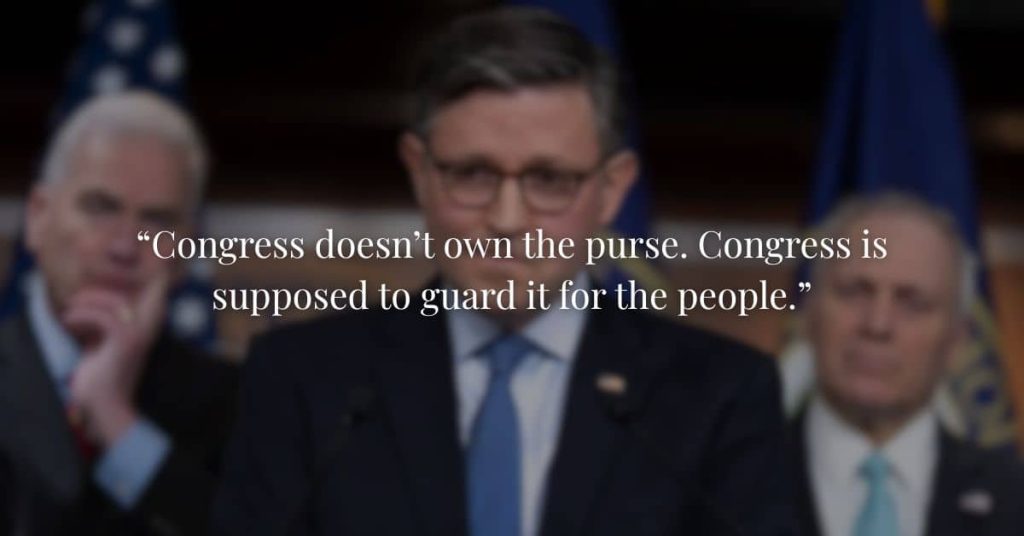
Congress doesn’t own the nation’s money. Congress holds the purse for the people. Congress is a trustee of the public treasury—constitutionally empowered to tax and spend, and constitutionally required to appropriate funds before any money leaves the Treasury. When I say “purse,” I’m not being funny. I’m being literal.
And trustees have a duty to the beneficiaries. When trustees repeatedly protect private interests while exposing beneficiaries to predictable harm, that is no longer “politics as usual.” That is a breach of trust.
The Purse Is the Point
The modern argument over the Affordable Care Act is dressed up in slogans: freedom, choice, socialism, dependency, personal responsibility, market discipline. All of that is smoke.
The real question is simple: What does Congress choose to purchase with public money?
Congress has the authority to extend affordability protections. Congress has the power to prevent a predictable coverage and premium crisis. Congress also has the power to do nothing—and pretend that doing nothing is neutral.
It is not neutral.
The Congressional Research Service (CRS) lays out the situation plainly: the Affordable Care Act’s premium tax credit continues, but the enhanced premium tax credit rules—expanded eligibility and larger subsidies—are scheduled to expire under current law, with the sunset date January 1, 2026, unless Congress extends them. If the enhanced help expires, the subsidy structure tightens: the 400% of poverty income cap returns and premium contributions increase for many households, and CBO expects fewer subsidized enrollees, lower federal expenditures, and a higher uninsured rate.
That’s not ideology. That’s policy mechanics.
So now, Americans are forced to watch a spectacle: lawmakers arguing as if the question is whether “Obamacare” deserves to live, while the operational reality is this—millions of real people will pay more, some will drop coverage, and Congress knows it.
If Congress Knows the Outcome and Still Refuses to Prevent It, Congress Owns the Harm
This is the sentence that ends the confusion:
If Congress knows the outcome, has the authority to prevent it, and chooses not to prevent it—Congress is responsible for the harm.
No one needs to keep asking, “Where is the plan?”
That is the plan.
The plan is the no-plan plan.
The no-plan plan is not just the absence of policy; it is a strategy of avoidance. It precipitates a crisis by allowing a known deadline to arrive. It creates budget “savings” through expiration. It allows lawmakers to posture about fiscal discipline without taking direct ownership of the human cost.
Every plan that produces a predictable disaster also comes with a PR plan.
In this case, the PR plan is to blame the insurance companies.
The Emotional Scapegoat: “Blame the Insurance Companies”
Public relations is storytelling. Storytelling requires a protagonist and an antagonist. Movies run on it. Campaigns run on it. Cable news runs on it. The moment the story is framed, people stop thinking like analysts and start reacting like jurors hungry for a verdict.
Americans love a villain with a logo.
So the easiest political move is to paint insurers as the monster, point the cameras, and let the public’s anger do the rest.
But I refuse to let emotion outrank evidence.
Yes, insurance is part of the system and part of the problem. But the data does not support the fantasy that insurer profit is the primary explanation for America’s healthcare cost crisis.
The National Association of Insurance Commissioners (NAIC) reported that in 2024 the health insurance industry’s profit margin fell to 0.8%, down from 2.2% in 2023, with net income dropping sharply—driven by increased medical costs and record-high utilization. That report also notes that total hospital and medical expenses rose significantly year over year.
That is not a conspiracy. That is fact.
And it also explains why people misunderstand “profit.” Thin margins can still produce enormous dollars at massive scale. That is how Walmart makes billions. That is how Costco makes billions. It’s volume. When everyone needs what you sell, you don’t require a fat margin to generate huge totals.
Healthcare has the same scale dynamic. Millions need care. Premium dollars are enormous. That does not make insurers innocent. It does make one point unavoidable: “Insurer greed” is not a sufficient explanation for this national crisis.
So why is Congress so comfortable hiding behind that story?
Because the real power centers of healthcare spending are harder to confront.
What’s Really Driving Costs: Provider Prices and Corporate Structure
KFF’s comparative analyses across developed countries have made this point repeatedly: the United States spends far more per person on healthcare than peer nations, and a major reason is higher prices, not simply higher use of care.
Prices are not an abstract concept. Prices come from bargaining power and market structure. When large health systems dominate regions, when hospitals acquire physician practices, when private equity and corporate consolidation reshape care delivery, pricing power increases. The patient does not negotiate. The patient is processed.
Research coverage and peer-reviewed work have linked consolidation dynamics to price increases without matching quality gains in many cases. The pattern is not subtle: market power pushes prices up, and consumers pay—through premiums, deductibles, copays, taxes, and medical debt.
So here is what Americans are watching:
Congress avoids direct confrontation with the most powerful cost drivers—consolidation, pricing leverage, the corporate structure of care—then turns around and “saves money” by letting affordability protections expire for the most vulnerable.
That is the bully strategy in policymaking: pick on the people who can’t fight back.
“We the People” vs. “We the Donors”
This is a representative government. The Constitution begins with “We the People,” not “We the donors.”
And yet, the behavior of Congress increasingly looks like a system where the public is treated like customers and donors are treated like stakeholders.
That is why the healthcare fight feels insane to ordinary Americans.
Why is there an actual fight over using tax dollars to make sure Americans can afford healthcare?
The answer is not that America lacks money. America spends staggering sums in multiple categories without moral panic, and healthcare already represents a massive share of the national economy.
The answer is that Congress’s incentives are warped. The incentives are not centered on human life. They are centered on power maintenance. Lobbying and political fundraising are not a side story; they are the operating system surrounding every major healthcare decision.
When that system is dominant, Congress can perform outrage about “greedy insurers” while quietly designing outcomes that preserve industry relationships and campaign pipelines—and the public can be left holding the bill.
This is not “Republicans versus Democrats” as a sporting event. This is a question of whether Congress still behaves like trustees of the purse or whether Congress has become a broker class—negotiating against the people with the people’s money.
The “No-Plan Plan” Produces the Crisis, Then Blames the Wrong Villain
The no-plan plan works like this:
- Refuse to extend known affordability protections.
- Let the deadline arrive.
- Watch premiums rise and enrollment fall.
- Blame a villain with a logo.
- Fundraise off the outrage.
- Protect the deeper structures that drive the cost crisis.
That is theater, not governance.
And the more this cycle repeats, the more trust dies.
Trust is not a feeling. Trust is a conclusion built from repeated evidence.
When Congress has the authority to prevent harm and still allows harm to arrive as a “budget event,” the public’s trust is not being “lost.” It is being destroyed.
The Book Is the Indictment—and the Blueprint
My January book is an indictment of Congress because It has become the gatekeeper of affordability while behaving as if the public is asking for charity rather than demanding rightful stewardship.
But the book is not only an indictment. It is also a blueprint. The country does not need another lecture about personal responsibility. The government needs governance that addresses the actual cost drivers, restores affordability protections, and treats healthcare as what it is: the protection of human life, the most precious resource on Earth.
Where is the Congress that represents us?
They are not our trustees but guards for corporate trust.
They are not like us.
They are not like us.
Our faith in them has turned to dust.
Congress is a bust.
Sources (Key References)
- Congressional Research Service (CRS). Enhanced Premium Tax Credit Expiration: Frequently Asked Questions (R48290). (Explains enhanced PTC sunset date January 1, 2026; summarizes CBO effects if allowed to expire.)
Congress.gov+2
Congress.gov+2
- National Association of Insurance Commissioners (NAIC). U.S. Health Insurance Industry | 2024 Annual Results. (Reports 2024 profit margin 0.8% and net income $9B; attributes decline to higher medical costs/utilization.)
NAIC
- Reuters. “Americans facing soaring health insurance costs may get a lifeline in 2026, experts say.” December 18, 2025. (Reports projections of 2026 premium increases if enhanced subsidies expire; political stalemate context.)
Reuters
- Associated Press. “Speaker Johnson was ready to move on from ACA subsidies. But his members had other plans.” December 18, 2025. (Reports discharge petition and internal GOP conflict over subsidy extension.)
AP News
- Washington Post. “Johnson says he still controls the House. Some fellow Republicans disagree.” December 18, 2025. (Reports internal House dynamics and use of discharge petition mechanisms.)
The Washington Post
Full Notes & Bibliography
A complete Chicago-style Notes & Bibliography page for this essay will be posted here within the next few days:
thepowerisnow.com/sources/congress-is-a-bust-no-plan-plan/
Thank you for reading this blog. I appreciate your continued support in raising awareness about the issues that impact our relationships, families, friendships, and the institutions and environments—political, social, and economic—in which we live and work. Please share this blog—and explore my other articles and videos—each one created to educate, empower, and uplift. Together, we can challenge the belief systems that hold us back and press forward into openness, love, consideration, and peace—opening doors of opportunity for all.Subscribe to The Power Is Now TV to connect with me live every weekday, Monday through Friday, from 10:00 AM to 11:00 AM PST, as we record television shows across The Power Is Now TV Network. As a subscriber, you can participate in live tapings, engage in real-time discussions, and connect directly with industry leaders.
Visit ThePowerIsNow.com to access real estate magazines, books, podcasts, television shows, and exclusive media content focused on homeownership, business, and wealth-building. For questions about The Power Is Now Media and programming, call 1-800-401-8994 ext. 703.
For personalized consulting and advisory services in real estate, mortgages, business, and personal finance, visit EricFrazier.com or call 1-800-261-1634 ext. 703 to schedule a consultation and learn more about my work as your trusted advisor in business and wealth.