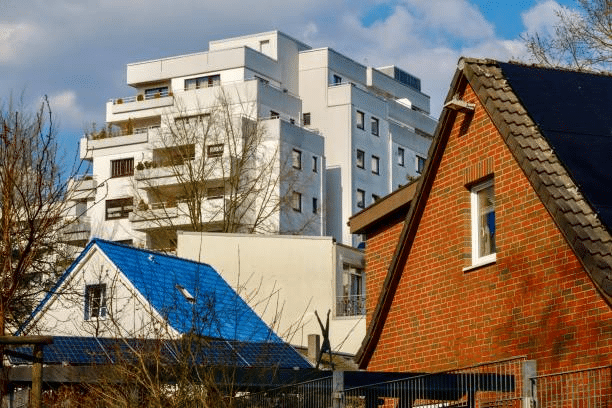
Fair Housing Series Part 7: Gentrification: Displacement or Opportunity?

The Hood Ain’t the Hood No More — And What You Do About It.

By Eric Lawrence Frazier, MBA

Anybody in their fifties or sixties has watched it happen in real time. The neighborhood that was the hood — the block where nobody with options wanted to be, the zip code that the banks redlined and the insurers avoided and the city neglected — is not the hood anymore. Compton is now called iwood. The South Side has coffee shops. The historically Black neighborhoods that sat adjacent to downtown in every major American city are now the most desirable real estate in those cities. And the people who were already there are being pushed out.

The pattern is not accidental and it is not new. Downtown, and the neighborhoods closest to it, were always where people of color lived. Not by choice in any meaningful sense, but because those were the neighborhoods closest to the service work, the restaurant jobs, the blue-collar employment that sustained Black and brown working families. The higher-income residents drove to the suburbs. They wanted distance from the city center. That was the model for most of the twentieth century.

Now the model has inverted. The knowledge economy, the tech economy, the creative economy all want to be in the urban core. Young professionals want to walk to work, to restaurants, to culture. Capital followed that preference. Investment flooded into neighborhoods that had been systematically disinvested for decades. The prices rose. The longtime residents, the people who had been there through the disinvestment and the neglect and the crime and the poverty, found themselves priced out of the neighborhoods they built.

What Displacement Actually Looks Like

Displacement is not a dramatic event. It does not announce itself. It is the landlord who raises the rent by $400 at the end of a lease. It is the property tax assessment that doubles after a neighbor’s home sells. It is the moment when the family that has lived in the same apartment for fifteen years does the math and realizes that no comparable unit within thirty minutes of downtown costs what they can afford.[3]

And then they move. Further out. To the communities on the exurban fringe where the housing is cheaper and the commute is longer and the job market is thinner. The service workers who made the restaurants and hotels and retail of the urban core possible now spend two hours a day on freeways to reach the jobs that displaced them from the neighborhoods where those jobs are located. The transportation cost consumes the savings from the cheaper rent. The time cost consumes the energy that might have gone into building something.

The outlying areas they move to are in development. The job market there is factory work, agricultural work, the early-stage service economy of a suburb that has not yet built the amenities of the city. The economic mobility that proximity to the urban core provided is gone.

What the Economy Owes You

No one can argue that investment does not raise the tide. Gentrification is real investment. It produces better schools, better infrastructure, better retail, better public safety. The question is who benefits from those improvements. The evidence is consistent: the longtime lower-income residents of gentrifying neighborhoods are displaced before those improvements materialize in their household finances. The neighborhood improves. They leave before the improvement reaches them.

The economy does not know your name. It does not know your history in a neighborhood, or your family’s tenure there or what your community built in a place that nobody else wanted. The market moves where investment flows, and prices follow. You cannot be angry at a market for doing what markets do. Anger at economic reality is not a strategy.

The solution for the working family facing displacement is not to wait for the market to become fair. The solution is to get in before the market moves further. Two families buying a duplex together. Three families are buying a small multi-unit. Pooling the down payment, sharing the note, each family holds equity in the asset that the market is about to reprice upward. The families who executed that strategy five years ago in Compton are not being displaced. They are benefiting from the same investment wave that is displacing everyone else.

Preference Out, Not Priced Out

There is a harder truth that sits underneath the displacement conversation, and it deserves to be said plainly: many of the people who say they cannot afford to buy are not priced out of homeownership. They are preferring out of it.

The home exists. The price exists. A mortgage payment comparable to or lower than a rent payment exists in many markets outside the immediate urban core. What does not exist, for a significant portion of the people who claim to be priced out, is a home that meets their preferences — the square footage they want, the neighborhood they prefer, the school district they have identified, the commute they are willing to accept, the finishes and the room count and the lot size that match the picture they have built in their head of what homeownership should look like.

The data supports this. Thirty-eight percent of first-time buyers who did not purchase cite preference for a different area as the primary reason. Not price. Area. And the area they prefer costs more than they will pay. That is not a market failure. That is a preference that the market is accurately pricing.

The sacrifice required to own is real. You may have to buy further out than you want. You may have to buy smaller than you imagined. You may have to partner with another family or live with extended family to make the numbers work. You may have to drive further than you prefer. These are not pleasant options. But they are options. The family that is genuinely priced out has no options. The family that is preference out has options they are not willing to take. That distinction matters because the solutions are different.

Decide what ownership is worth to you. Name the preference clearly and decide what you will trade away. The neighborhood. The square footage. The location. The timeline. Something has to give. The market is not going to give. The market is going to keep moving. The only variable you control is your own decision about when the asset you can afford is worth acquiring. Get in anyway. The family that bought what they could afford in a neighborhood they did not prefer, held it, and waited for the neighborhood to change — that family is now sitting on equity they never expected to have.


Poetry says the rest.

The Hood Ain’t the Hood No More

Anybody in their fifties saw the neighborhood transform.

What used to be the struggle block is now above the norm.

Compton got a new name and the hood put on a suit.

Investment moved on in and now the prices follow suit.


Downtown was the place where working people always stayed.

Close to restaurants and blue-collar jobs and what they made.

The higher incomes drove to suburbs far away from there.

Now money flows back into the city and the working people bear.


The economy don’t know your name and don’t care where you’re from.

Prepare yourself for opportunity or watch it become someone’s.

Pool the money, buy the property, get in before the wave.

The neighborhood is changing — what you do today is what you save.


They’re being pushed out further and the commute gets long and wide.

The freeways fill with workers who no longer live inside.

The service jobs remain downtown but the workers drive from far.

And the outlying areas only offer what they are.


No one can argue that investment doesn’t raise the tide.

The economy don’t know your name and don’t choose a side.

It moves where opportunity exists and prices follow there.

You cannot be angry at the market — it simply doesn’t care.


The economy don’t know your name and don’t care where you’re from.

Prepare yourself for opportunity or watch it become someone’s.

Pool the money, buy the property, get in before the wave.

The neighborhood is changing — what you do today is what you save.


The only answer for the working family priced out of the core

Is to pool the money with another family and get more.

Buy the duplex close to work before the market moves again.

The solution isn’t anger — it’s the action you take and when.


The market owes you one thing only — and that thing is a chance.

Prepare yourself to take it or create your own advance.

It may be your fate to drive — not everyone will own.

The sacrifice required is real and some won’t leave the known.


The economy don’t know your name and don’t care where you’re from.

Prepare yourself for opportunity or watch it become someone’s.

Pool the money, buy the property, get in before the wave.

The neighborhood is changing — what you do today is what you save.


They say they’re priced out but the square footage isn’t right.

The neighborhood isn’t where they want and nothing’s worth the fight.

The room count and the location and the standard that they hold

Is keeping them from buying what the market has to sold.


You are not priced out of a home — you’re preference out instead.

The home exists. The price exists. It just ain’t what you said

You wanted when you pictured it. And so you wait and wait.

And the market keeps on moving and you arrive a little late.


The economy don’t know your name and don’t care where you’re from.

Prepare yourself for opportunity or watch it become someone’s.

Pool the money, buy the property, get in before the wave.

The neighborhood is changing — what you do today is what you save.


The hood ain’t the hood no more and that is just the fact.

Investment came and raised the price and never looked back.

The market is the boss out there and you have no clout.

Prepare. Pool up. Buy in before the market prices you out.


The economy don’t know your name and don’t care where you’re from.

Prepare yourself for opportunity or watch it become someone’s.

Pool the money, buy the property, get in before the wave.

The neighborhood is changing — what you do today is what you save.


So name the preference clearly and decide what you will trade.

The neighborhood. The square footage. The location you have made

Into a standard that the market cannot meet at what you’ll pay.

Decide what ownership is worth and get in anyway.


The economy don’t know your name and don’t care where you’re from.

Prepare yourself for opportunity or watch it become someone’s.

Pool the money, buy the property, get in before the wave.

The neighborhood is changing — what you do today is what you save.


CONTINUE THE CONVERSATION

Watch the 2026 Fair Housing Series

Airing now on The Power Is Now TV Network — Roku, Fire TV, Apple TV, and thepowerisnow.com.

Attend the Real Estate Seminar — April 26

Eric Lawrence Frazier, MBA, is hosting a live real estate seminar on April 26. In person at Coldcutz Barbershop in Riverside, California, or join us online. Details and registration at EricFrazier.com.

Become a Member

Membership is free to start. Full access to the series, the magazine, free books, and the community at thepowerisnow.com.

Get the Books

The Credit Handbook and How to Run Your Household Like a Business at EricFrazier.com/bookstore.

The Power Is Now Real Estate News — 24/7

Available around the clock on The Power Is Now TV Network and at thepowerisnow.com.

Eric Lawrence Frazier, MBA
Your trusted advisor in business and wealth advisor
www.ericfrazier-com-869976.hostingersite.com | www.thepowerisnow.com
NMLS #451807 | CA DRE #01143484
Schedule a consultation: https://calendly.com/ericfrazier/real-estate-mortgage-consultation-clients

References for this essay are available at thepowerisnow.com/fairhousing2026

Leave a Comment

Scroll to Top