
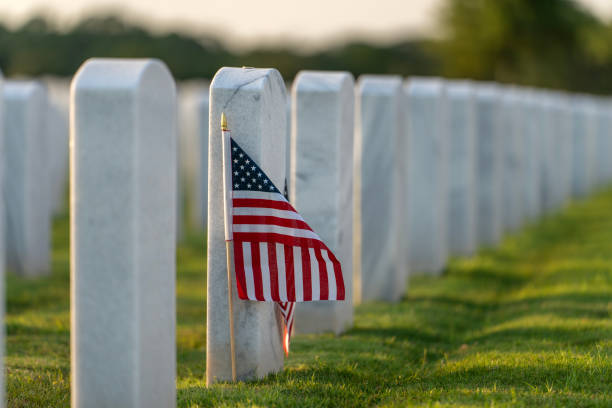
Each year, as the final Monday of May approaches, America slows its pace—not for a celebration, but for solemn reflection. Memorial Day is not merely a long weekend or the unofficial start of summer; it is a national day of remembrance, a sacred pause to honor the brave men and women who paid the ultimate price for our country.
Across communities large and small, flags fly at half-staff, wreaths are placed on tombstones, and the echo of “Taps” fills the air at cemeteries and memorial sites. It’s a day heavy with gratitude and shadowed by the weight of countless sacrifices made on behalf of freedom.
Memorial Day’s beginnings stretch back to the aftermath of the American Civil War—the bloodiest conflict in U.S. history, which claimed more American lives than any other war. In the wake of so much loss, families and communities began holding informal tributes to honor their loved ones. They decorated graves with flowers and flags, shared stories, and gathered in solemn observance.
These acts of remembrance coalesced into what was first known as Decoration Day, formally established in 1868 by General John A. Logan of the Grand Army of the Republic. On May 30 of that year, flowers were placed on the graves of both Union and Confederate soldiers at Arlington National Cemetery.
Although the origins of Memorial Day can be traced to the Civil War, its meaning has grown to encompass all American service members who lost their lives in military conflicts—from World Wars I and II to Korea, Vietnam, Iraq, Afghanistan, and beyond.
In 1971, Memorial Day became a federal holiday, officially observed on the last Monday of May to create a three-day weekend for reflection and unity (History.com Editors, 2009).
While Memorial Day weekend often brings barbeques, beach trips, and retail sales, the essence of the day lies not in leisure but in legacy. Behind each American flag fluttering on a porch or grave is a life once lived—a soldier, sailor, airman, or marine who gave everything so that we might enjoy the freedoms we often take for granted.
Today, more than 1.3 million U.S. military members have died in service since the nation’s founding (U.S. Department of Veterans Affairs, n.d.). These are not just numbers; they are names, faces, and stories—brothers and sisters, sons and daughters, parents and friends.
It’s our responsibility as citizens to ensure their sacrifice is never forgotten. Memorial Day serves as a vital reminder to pause, reflect, and honor those who never made it home. ????️
Across the United States, Memorial Day is observed in a variety of meaningful ways:
- Visiting cemeteries and war memorials to pay respects with flowers or American flags.
- Holding parades that often feature veterans’ organizations, Gold Star families, and local officials.
- Flying the flag at half-staff until noon, then raising it briskly until sunset.
- Participating in the National Moment of Remembrance at 3:00 p.m. local time, when Americans pause for one minute of silence.
- Listening to or playing “Taps,” the haunting bugle call that honors fallen soldiers.
At Arlington National Cemetery, a poignant tradition continues each year: members of the 3rd U.S. Infantry Regiment, known as “The Old Guard,” place more than 260,000 flags at gravesites in an event called “Flags In.”
These gestures—large or small—are how we show that their service, and their sacrifice, still matter.
While Memorial Day is a national observance, for many, it is also deeply personal. For families of fallen service members—often called Gold Star families—every day is Memorial Day.
These families live with a unique kind of grief. The folded flag presented at a military funeral becomes a daily reminder of what was lost. The ache never truly leaves, but neither does the pride in knowing their loved one served with courage and honor.
Memorial Day is not only about looking back; it’s about standing beside these families today. Listening to their stories. Acknowledging their loss. And reaffirming that the lives lost were not in vain.
In today’s fast-paced, digitally distracted world, it can be easy to let national holidays pass without reflection. But Memorial Day isn’t just another date on the calendar—it’s a moral obligation.
It asks us to remember that freedom is never free. It challenges us to carry the torch of remembrance so the sacrifices made are never forgotten. And it unites us, across politics, races, and regions, under a shared banner of respect and gratitude.
Memorial Day reminds us of the ideals that built this country—service, sacrifice, and a sense of duty to something greater than oneself.
You don’t need to be a veteran or a military family member to honor Memorial Day. Here are some ways to participate meaningfully:
- Pause for a moment of silence at 3:00 p.m. local time.
- Share the story or name of a fallen service member on social media.
- Volunteer or donate to veteran support groups like TAPS, the USO, or Wounded Warrior Project.
- Attend a local memorial service or visit a military cemetery.
- Teach your children about the importance of the holiday and the people it honors.
To the fallen heroes who laid down their lives in service to this nation, we thank you. Your courage, your sacrifice, and your unwavering dedication will never be forgotten.
To the families you left behind, who carry the weight of your memory with grace and strength, we thank you. Your resilience is a testament to the depth of your love and the magnitude of your loss.
And to every American who pauses today to reflect, remember, and honor, we thank you. It is in these quiet moments of remembrance that our nation’s conscience is renewed.
This Memorial Day, let’s do more than remember. Let’s live in a way that honors their legacy—with gratitude, with purpose, and with a commitment to serving others.
Your trusted advisor in business and wealth
www.ericfrazier-com-869976.hostingersite.com | www.thepowerisnow.com
NMLS #451807 | CA DRE #01143484
Schedule a consultation: https://calendly.com/ericfrazier/real-estate-mortgage-consultation-clients
- History.com Editors. (2009, October 27). Memorial Day. History. https://www.history.com/topics/holidays/memorial-day-history
- National Cemetery Administration. (n.d.). Memorial Day History. U.S. Department of Veterans Affairs. https://www.cem.va.gov/history/memorial-day-history.asp
- U.S. Memorial Day. (n.d.). National Moment of Remembrance. https://www.usmemorialday.org/national-moment-of-remembrance
- U.S. Department of Veterans Affairs. (n.d.). Facts about Memorial Day. https://www.va.gov/opa/speceven/memday/